Thanks for visiting! We study how climate, disturbance, succession, and vegetation structure affect leaf to landscape processes in forests and wetlands. We seek M.S. and Ph.D. students to partner in research supported by the Department of Energy (DOE), National Science Foundation (NSF), EPA and NASA. Our work is conducted at VCU's Rice Rivers Center, the University of Michigan Biological Station, and across North America and beyond.
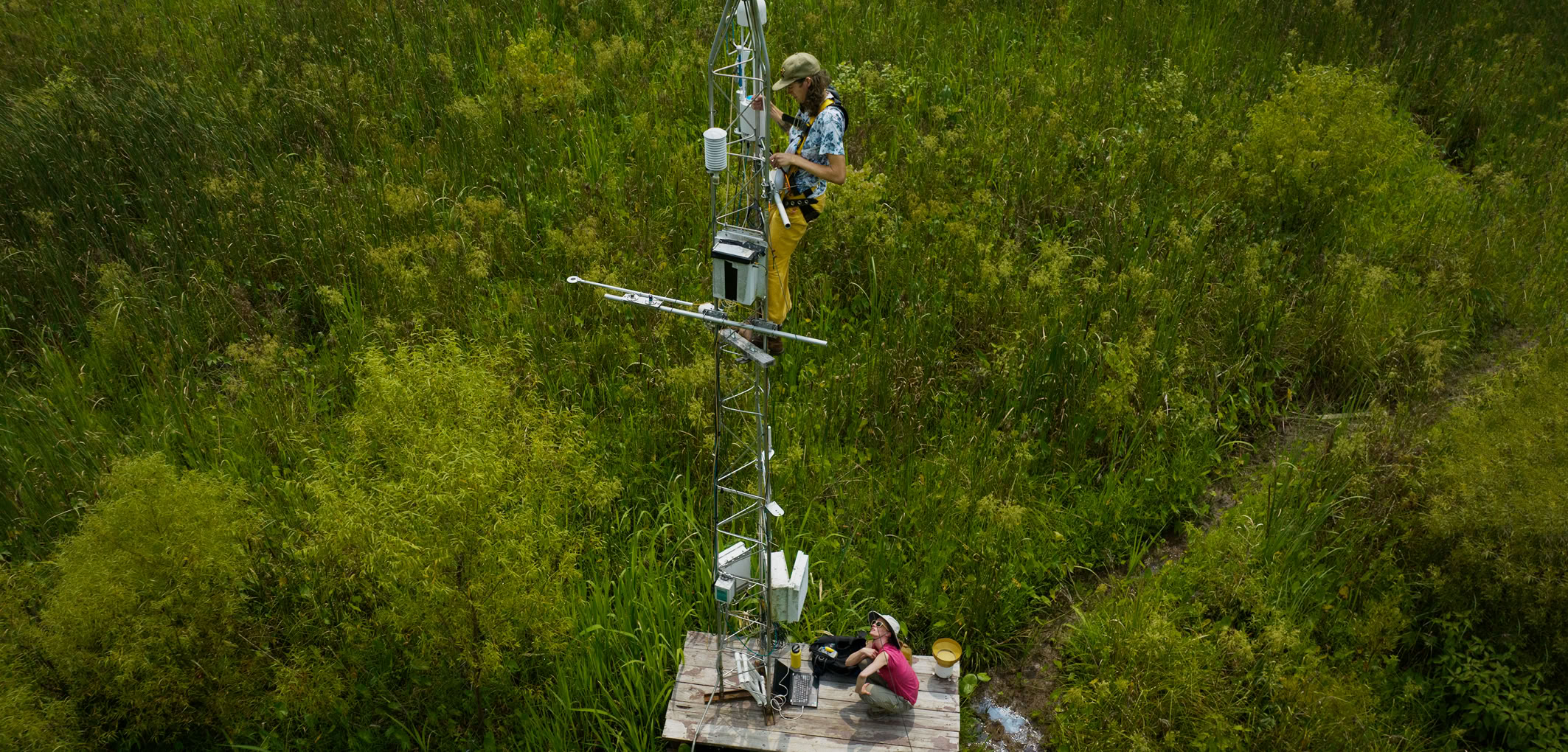
What we do: National Science Foundation projects ask how forests respond to disturbance. NASA’s Student Airborne Research Program and the new Training and Research in Earth and Environmental Sciences (TREES) Program provide immersive training. NASA and DOE projects investigate mid-Atlantic wetland carbon cycling and biodiversity using cutting-edge ground, air, and satellite observations. A Chesapeake Carbon Consortium (C3) project with the Nature Conservancy supports nature-based solutions through ecological restoration.