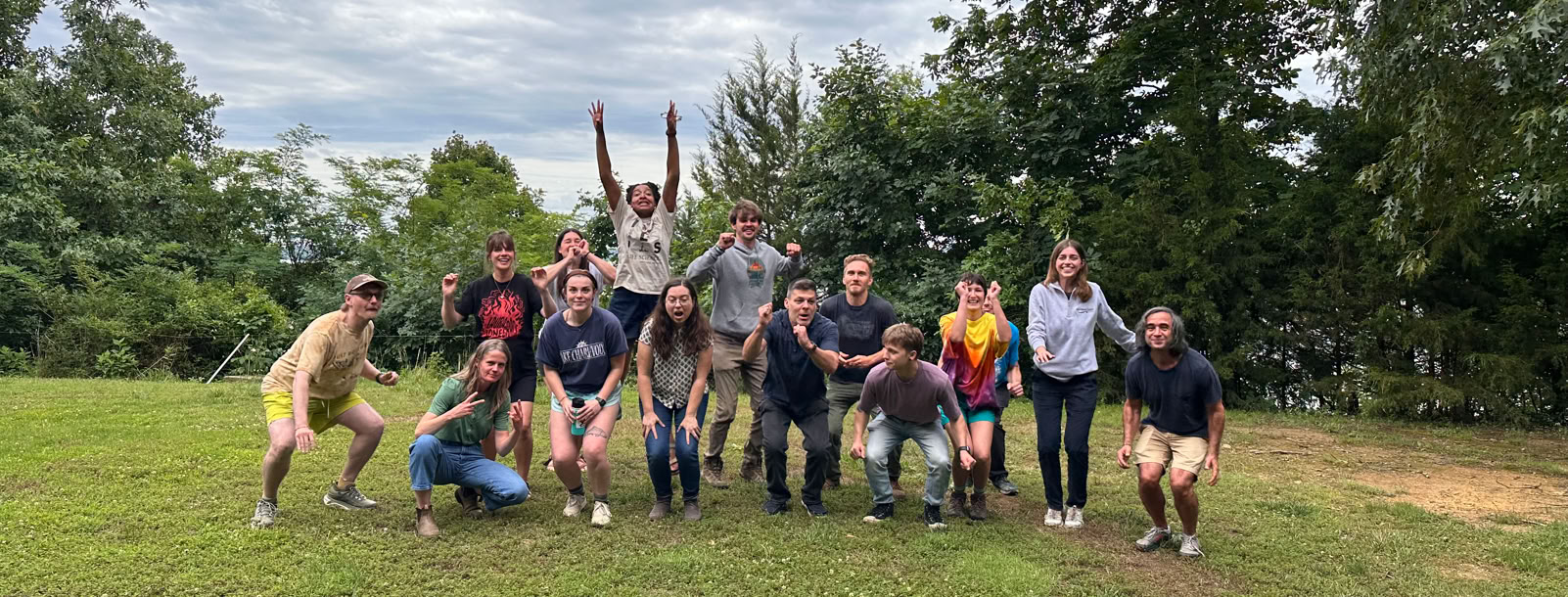
Thanks for visiting! We study how climate, disturbance, succession, and vegetation structure affect leaf to landscape processes in forests and wetlands. We seek M.S. and Ph.D. students to partner in research supported by the Department of Energy (DOE), National Science Foundation (NSF), EPA and NASA. Our work is conducted at VCU's Rice Rivers Center, the University of Michigan Biological Station, and across North America and beyond. 


What we do: National Science Foundation projects ask how forests respond to disturbance. NASA’s Student Airborne Research Program and the new Training and Research in Earth and Environmental Sciences (TREES) Program provide immersive training. NASA and DOE projects investigate mid-Atlantic wetland carbon cycling and biodiversity using cutting-edge ground, air, and satellite observations. A Chesapeake Carbon Consortium (C3) project with the Nature Conservancy supports nature-based solutions through ecological restoration.
NEWS

The Spring semester is underway and it’s writing and planning season! Brandon is wrapping up a paper linking forest structural complexity to continental biodiversity, Lisa is leading a mid-Atlantic wetland methane flux analysis, and Ariel is putting the final touches on a paper examining how disturbance severity reshapes forest plant communities. We are planning the field season ahead, which will encompass new applied research supporting the Nature Conservancy’s implementation of nature based solutions. 

Spring

We just concluded the Fall with an energizing American Geophysical Union Fall Meeting, where nine members of the lab presented on a range of research topics, including forest structure and biodiversity, wetland biogeochemistry, and compound disturbance effects on forest structure and carbon cycling. 

Fall

What a summer! Erin-Darby McClain and Angela Menna successfully defended M.S. theses, students and postdocs conducted research in Michigan’s forests and mid-Atlantic wetlands, and Chris started as Executive Director of the Rice Rivers Center. VCU hosted 24 student interns participating in NASA’s Student Airborne Research Program. We welcomed a new M.S. student, Douglas Giles, to the lab. He spent the summer installing a NASA-loaned hyperspectral instrument in a restored wetland! And, we received a new NSF award to study compound disturbance effects on forest carbon cycling. 

Summer

Partially defoliated canopy.